
Aircon regas cost in Perth: when you need one and what it involves
By Clara Abbott · Updated 2026-07-11
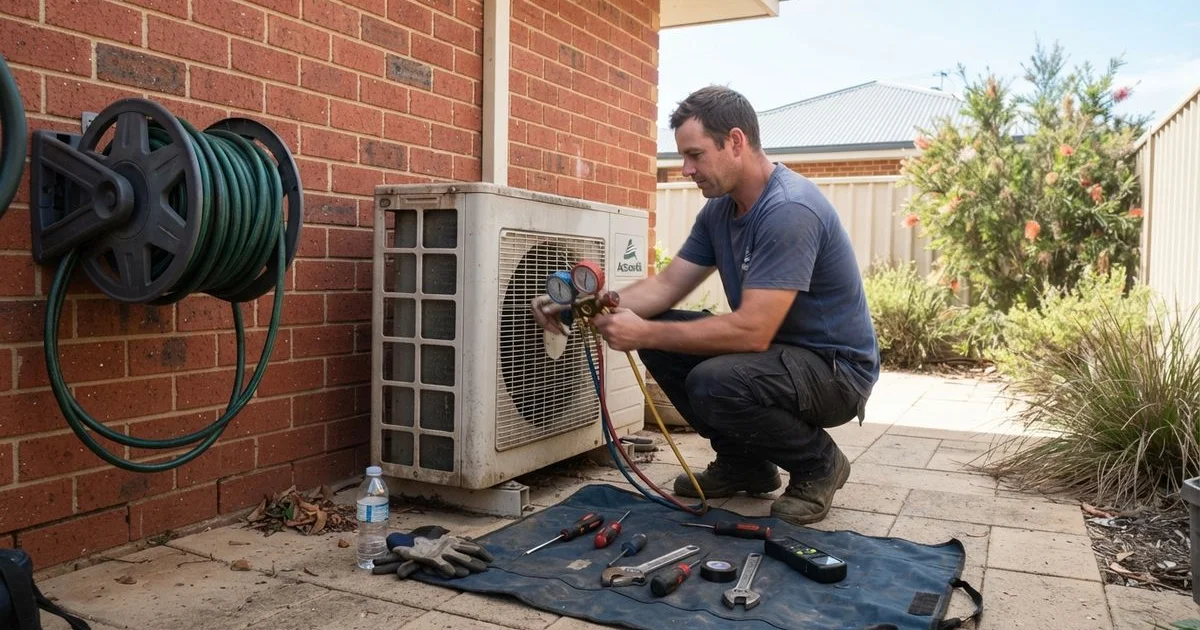
A regas, short for a refrigerant top-up, comes up a lot in conversations about aircon repair costs, and it’s one of those jobs where the price genuinely depends on what a technician finds once they’re on site rather than a fixed number you can look up in advance.
What a regas actually involves
Refrigerant is the gas that circulates through your system’s coils, absorbing heat from inside your home and releasing it outside. Unlike engine oil, it isn’t consumed through normal running, so a system that’s low on gas almost always has a leak somewhere in the line. A proper regas job starts with a technician checking pressure with gauges, then tracking down where gas is escaping before adding any more, since simply topping up a leaking system is a temporary fix that leaves you paying for another top-up down the track.
Our AC repair and servicing hub lists Perth contractors who handle regas and diagnostic work, so you can compare who’s on offer before booking.
What changes the cost
There’s no single flat rate for a regas, because the job can range from a quick top-up to a full leak investigation. A few things typically affect where a quote lands:
- Refrigerant type. Different systems use different gases, and some are more expensive per kilogram than others.
- How much gas is needed. A slightly low system needs less refrigerant than one that’s run empty for a while.
- Leak location and access. A leak that’s easy to find and reach costs less to fix than one hidden inside a wall cavity or a hard-to-reach outdoor line.
- System size. A small split system holds less refrigerant than a large ducted setup, so a full recharge scales with capacity.
- Whether it’s diagnosis-only or diagnosis plus repair. Some callouts are just to confirm what’s wrong; others cover finding the leak, repairing it, and then recharging the system in one visit.
Because of that spread, the most reliable way to get a real number is a technician’s quote after they’ve seen the system, rather than a figure taken from an online estimate.
Signs your system might need one
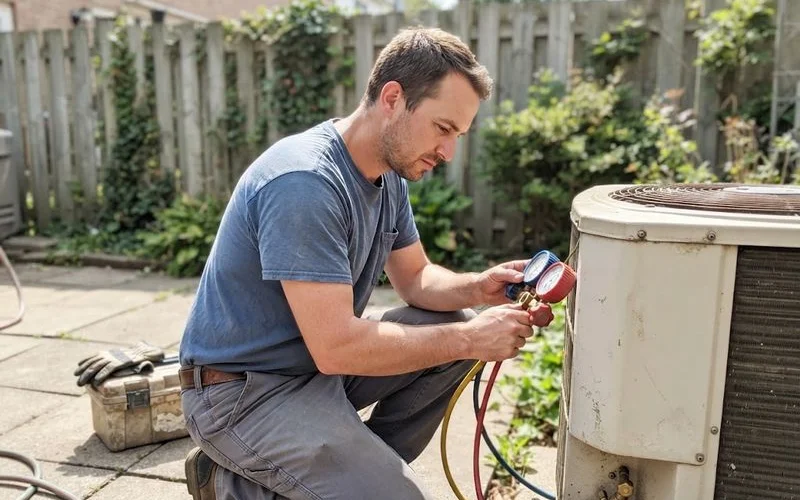
A few symptoms tend to show up before a system fails outright: cooling feels noticeably weaker than it used to, the unit runs constantly without reaching the set temperature, you notice ice on the indoor coil or on outdoor pipework, or there’s a faint hissing sound near the outdoor unit. None of these confirm a low-refrigerant issue on their own, since some overlap with a dirty filter or a failing fan motor, which is exactly why a proper diagnosis matters more than guessing and asking for a top-up outright.
Why licensing matters here
Refrigerant handling in Australia is legally restricted to technicians holding a current ARCtick licence, and that isn’t red tape for its own sake. Mishandled refrigerant is a genuine safety and environmental risk, which is part of why this work can’t be done as a DIY job. When you’re comparing quotes, it’s reasonable to ask to see a technician’s licence number and confirm it’s current before work starts.
This is general information, not a substitute for a licensed technician’s on-site assessment. Actual pricing and diagnosis will depend on your specific system and its condition.
Getting a fair quote
Ask whether the quote covers diagnosis only, or diagnosis plus a leak repair and recharge, since those are different scopes of work that shouldn’t be priced the same. A technician who explains what they found on the gauges, rather than just stating a number, is generally giving you a more trustworthy read on the job.
Why a regas isn’t a permanent fix on its own
If a technician tops up the gas without finding and repairing the leak first, the system will likely run low again within months, and you’ll be paying for another callout. A proper job treats the top-up as the last step, not the whole job: find the leak, repair it, pressure test the repair, then recharge to the correct level. It costs more upfront than a quick top-up, but it avoids paying for the same problem twice within a year.
How to avoid needing one as often
Regular servicing doesn’t stop refrigerant leaks from developing, but it does mean small leaks get caught early rather than left until the system stops cooling properly. A technician checking pressures during an annual service can often spot a slow leak well before it becomes obvious through poor performance, which usually means a smaller, cheaper repair than waiting until the system has run low enough to notice on its own.
For more on how we evaluate and rank local contractors, see our methodology page. You can also browse the home page for other guides on keeping a system running well through Perth’s long cooling season.
FAQ
- How do I know if my air conditioner needs a regas?
- Common signs include reduced cooling power, the unit running longer than usual to reach the set temperature, ice forming on the indoor coil or outdoor pipework, or a hissing sound near the outdoor unit. A technician can confirm with a gauge reading rather than guesswork.
- Is a regas the same as a full service?
- No. A standard service covers filter cleaning, coil checks and drainage, and doesn't necessarily involve touching the refrigerant. A regas is specifically about refrigerant level, and a technician should only add gas after confirming there isn't an active leak, since topping up a leaking system is a short-term fix.
- Why would a technician want to find a leak before topping up the gas?
- Refrigerant doesn't get used up through normal running, a system that's low almost always has a leak somewhere. Topping up without finding and fixing the leak means you'll likely need another regas within months, so a proper diagnosis saves money over time.
- Can I regas my own air conditioner?
- No. Refrigerant handling in Australia legally requires an ARCtick licence, and mishandling refrigerant gas carries real safety and environmental risks. Any regas work has to be done by a licensed technician.
Related on this site
- Browse ac repair & servicing providers
- Best ac repair & servicing in Perth metropolitan →
- Mould, dust and air quality risks in air conditioning: what to watch for
- Getting your air conditioner ready for a Perth summer: a pre-season checklist
- What air conditioning installation costs in Perth
- What a ducted air conditioning system costs in Perth
- All guides →