
Who's responsible for aircon repairs in a rental property in WA
By Clara Abbott · Updated 2026-07-21
This is general information about how tenancy responsibilities typically work in Western Australia, not legal advice. Every lease is different, and if you’re in a dispute, check your specific tenancy agreement and current WA tenancy law, or contact Consumer Protection WA directly.
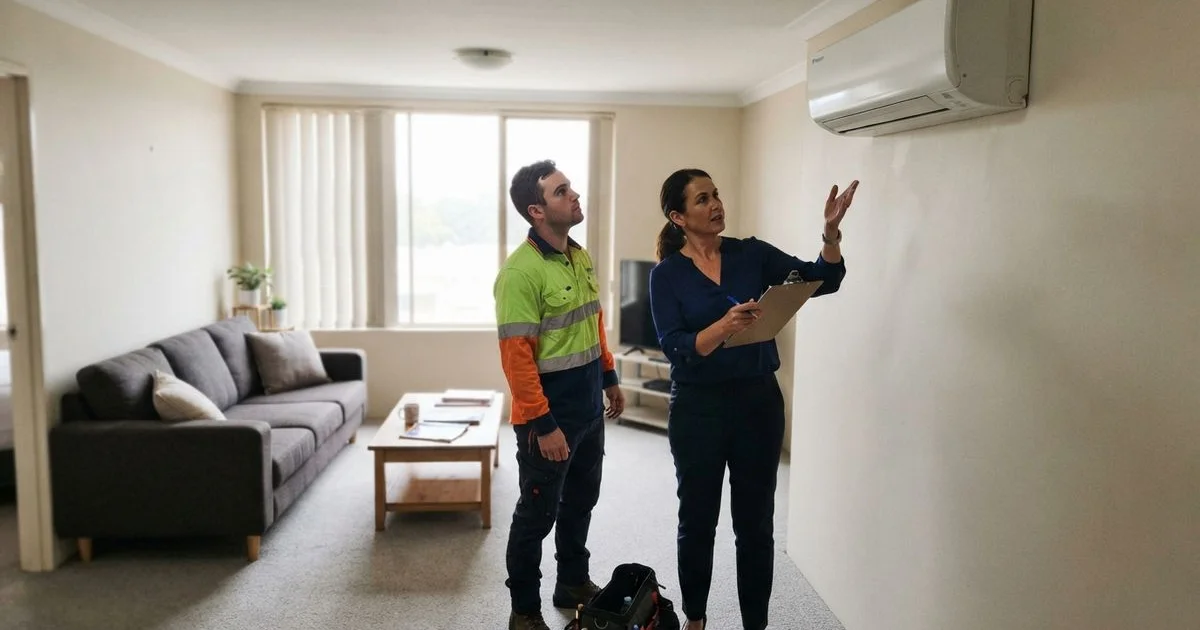
Air conditioning repair responsibility in a rental property trips people up because it isn’t always as simple as “the landlord fixes everything.” Whether a landlord is obligated to repair or replace an air conditioning unit generally comes down to whether it was part of the property when you moved in, and what your specific lease says.
The general principle
Under WA’s residential tenancy framework, landlords are expected to keep a rental property in a reasonable state of repair for the duration of the tenancy. If air conditioning was installed and working when you signed the lease, and it’s listed as an inclusion, it’s generally treated as a fixture the landlord is responsible for maintaining, the same as a hot water system or a stove. If a property never had air conditioning and a tenant installs a portable unit themselves, that’s a different situation, and the landlord typically has no obligation to maintain equipment they didn’t provide.
Where it gets less clear
A few scenarios sit in a grey area and are worth checking against your specific lease:
- Aircon added after you moved in. If a landlord installs air conditioning partway through your tenancy, check whether the updated lease or a written agreement reflects that as an inclusion going forward.
- Shared or common-area systems. In some apartment buildings, air conditioning is tied to body corporate infrastructure rather than the individual landlord, which changes who you report a fault to.
- Damage caused by the tenant. If a fault is due to tenant misuse rather than normal wear, a landlord may reasonably expect the tenant to cover some or all of the repair cost, depending on the circumstances.
What to do when something breaks
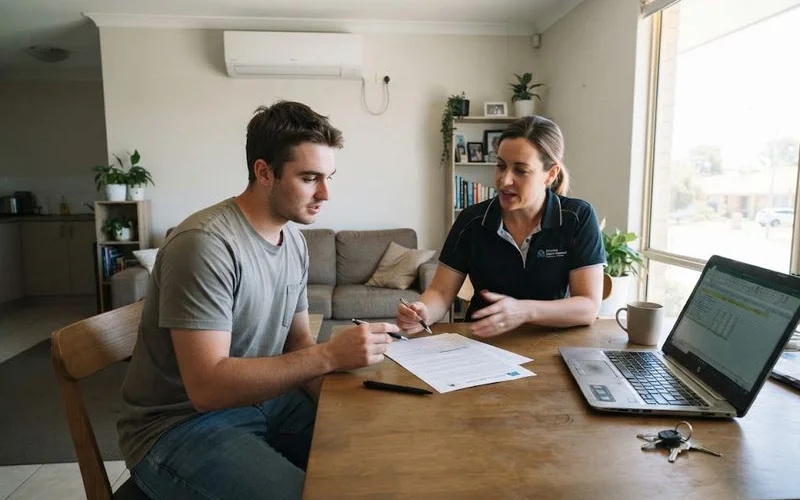
Report the fault in writing as soon as you notice it, by email or through whatever portal your property manager uses, so there’s a timestamped record. Describe the problem clearly and, if it’s affecting liveability during hot weather, say so directly rather than downplaying it. Keep a copy of everything you send and any response you get back.
| Situation | Typical responsibility |
|---|---|
| Aircon included and working at lease start, now faulty | Usually landlord’s responsibility to repair |
| No aircon at lease start, tenant added their own unit | Usually tenant’s responsibility |
| Fault caused by normal wear and age | Usually landlord’s responsibility |
| Fault caused by tenant misuse or damage | May fall to the tenant, depending on circumstances |
If a repair isn’t happening
WA tenancy law distinguishes between urgent and non-urgent repairs, and a complete breakdown during a heatwave is more likely to be treated as urgent than a system that’s simply underperforming. If a reasonable follow-up isn’t getting a response, Consumer Protection WA runs a dispute resolution process specifically for residential tenancies, and the Magistrates Court can hear tenancy matters if it goes further than that. Keep every piece of correspondence along the way, since a clear paper trail makes any dispute process faster and simpler.
What a property manager typically needs from you
To get a repair moving quickly, describe the fault as specifically as you can: whether the unit isn’t turning on at all, is running but not cooling, or is making an unusual noise. Mention how long it’s been an issue and whether it’s affecting particular rooms or the whole property. A property manager arranging a contractor will usually want this detail before booking, so having it ready in your first written report saves a round of back-and-forth. If you’re arranging the repair yourself with the landlord’s approval, it’s worth confirming whoever does the work holds the right licensing; see our guide on air conditioning licensing rules in WA for what a contractor should hold.
Before you sign a new lease
If air conditioning matters to you, it’s worth confirming its condition and inclusion status before signing rather than assuming. Ask directly whether it’s included in the tenancy, when it was last serviced, and whether there’s any known issue with it. Getting that in writing, even as a simple line in the lease or a confirming email, gives you something concrete to point back to if a dispute over responsibility comes up later in the tenancy.
For details on how we build our directory rankings, see our methodology page. Visit the home page to browse other guides on air conditioning costs, servicing and buying decisions in Perth.
FAQ
- Is a landlord always required to fix a broken air conditioner?
- Generally, if air conditioning was included and working at the start of the tenancy, a landlord is expected to keep the property in a reasonable state of repair, which usually extends to fixtures like a built-in AC system. If air conditioning wasn't part of the original property, the position is less clear and depends on the lease terms.
- What should I do first if my rental's air conditioning breaks down?
- Report it to your property manager or landlord in writing, by email or through the rental portal, so there's a clear record of when the fault was raised. Keep a copy for yourself in case you need to follow up.
- How long does a landlord have to arrange a repair?
- There's no single fixed number that covers every situation, urgency generally depends on the nature of the fault, and WA tenancy law distinguishes between urgent and non-urgent repairs. A complete breakdown during extreme heat is more likely to be treated as urgent than a minor performance issue.
- What if the landlord isn't responding to a repair request?
- If reasonable follow-up isn't getting a response, Consumer Protection WA has a dispute resolution process for residential tenancies, and the Magistrates Court can also hear tenancy disputes as a last resort. Keep records of every communication in case you need them.