
Air conditioning and asthma or allergies: does it help or hurt
By Clara Abbott · Updated 2026-07-29
This is general information, not medical advice. If asthma or allergy symptoms are affecting your daily life, talk to a doctor about a management plan rather than relying on air conditioning changes alone.
This question comes up a lot, and the honest answer is that air conditioning can genuinely help or genuinely hurt, depending almost entirely on how well the system is maintained rather than the technology itself.
Why a clean system generally helps
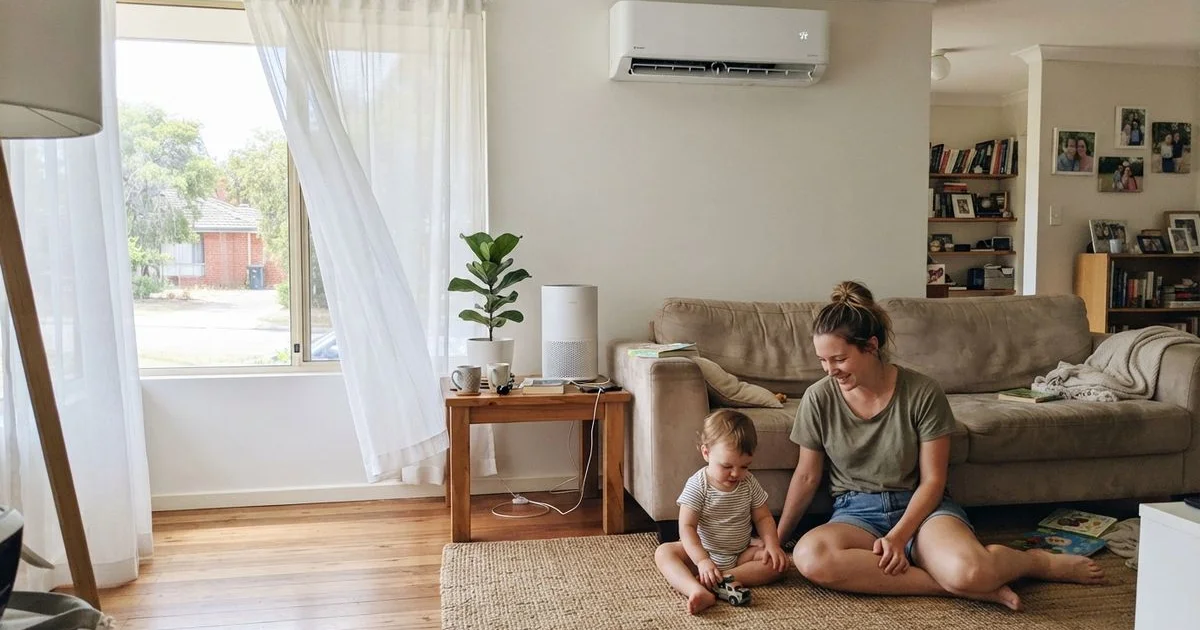
Running air conditioning with a clean filter reduces indoor humidity, which matters because dust mites and some mould species thrive in damp air. It also means windows can stay closed during high pollen periods or dusty, windy days, common in Perth’s drier months, cutting down how much outdoor allergen makes it inside in the first place. A system that’s running well and filtered properly is, for most people with mild to moderate allergy symptoms, a net improvement over an open window and a stuffy room.
Why a neglected system can make things worse
The flip side is just as real. A dirty filter, a coil with buildup, or a blocked condensate drain creates exactly the damp, dusty environment that mould and dust mites need, and every time the system runs, it can circulate that material through the room rather than filtering it out. If someone’s allergy or asthma symptoms seem worse specifically indoors, or specifically when the aircon is running, a dirty system is a reasonable first thing to check, well before assuming it’s something else entirely.
What actually makes the difference
| Factor | Helps symptoms | Can worsen symptoms |
|---|---|---|
| Filter condition | Clean, regularly checked filter | Dirty, clogged filter left unchanged |
| Servicing frequency | Regular servicing, especially before summer | System hasn’t been serviced in over a year |
| Humidity control | Running the system keeps indoor humidity down | Musty, humid rooms with poor ventilation |
| Coil condition | Clean coil, no visible mould | Visible mould or a persistent musty smell |
Practical steps if allergies are a factor in your household
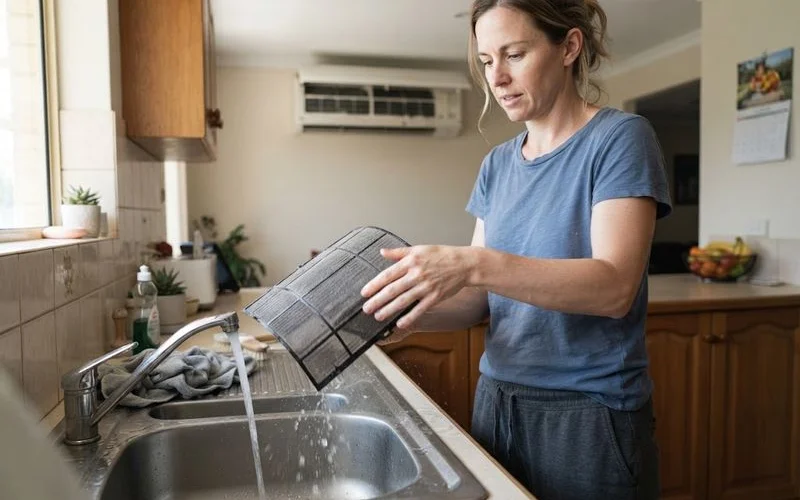
Checking and cleaning filters more often than the general once-a-year minimum makes a real difference, aim for every four to eight weeks during heavy use rather than waiting for the annual service reminder. If you notice a musty smell on startup, don’t ignore it, since that’s usually an early sign the coil or drain needs attention. And if symptoms genuinely seem tied to specific rooms or specific times the system runs, it’s worth having a technician inspect the unit rather than assuming it’s unrelated.
When it’s worth getting a technician to look
A musty smell, visible dark spots around vents or the filter, or a noticeable increase in dust are all signs worth acting on rather than living with. These are usually straightforward to fix with a proper clean, and addressing them tends to help both air quality and how efficiently the system runs.
Ducted versus split systems for allergy-prone households
The type of system matters a bit less than how well it’s maintained, but there are some differences worth knowing. Ducted systems draw return air through a central filter, which can make it easier to keep one filtration point clean rather than managing several separate indoor units. Split systems each have their own filter, so a household with multiple split systems needs to stay on top of more than one, though each unit is also quicker and cheaper to clean individually. Neither setup is inherently better for allergies, consistency of maintenance matters more than which type you have.
Talking to your GP as part of the picture
If someone in your household has a formal asthma or allergy diagnosis, it’s worth mentioning your home’s air conditioning setup during a checkup, since a doctor may have specific advice based on triggers that are relevant to that person. Air conditioning maintenance is one part of managing an indoor environment, alongside things like reducing dust-collecting clutter and managing humidity generally, and a GP or allergist can help you weigh how much it’s likely to matter for a specific diagnosis.
Visit our home page for other guides on keeping a system clean and running well, and see our methodology page for how we assess and rank contractors across Perth.
FAQ
- Can air conditioning trigger asthma symptoms?
- A poorly maintained system can, mostly through dust, mould spores or allergens building up inside and being circulated through the room. A clean, well-serviced system is generally less of a trigger than a stuffy, humid room with the windows shut and no filtration at all.
- Does air conditioning filter out pollen and allergens?
- Standard filters catch larger particles like dust and some pollen, though they're not designed as medical-grade air filtration. Running the system with clean filters and windows closed during high pollen periods can reduce how much pollen circulates indoors compared to an open window.
- How often should filters be cleaned if allergies are a concern?
- More often than the general once-a-year minimum. Checking and cleaning filters every four to eight weeks during heavy use, and staying ahead of the annual professional service, makes a real difference if allergies or asthma are a factor in your household.
- Should someone with asthma avoid air conditioning altogether?
- Not generally, a well-maintained system is usually a net positive by reducing humidity and filtering some airborne particles. The exception is a system that hasn't been serviced and has visible mould or a musty smell, which is worth addressing before relying on it.